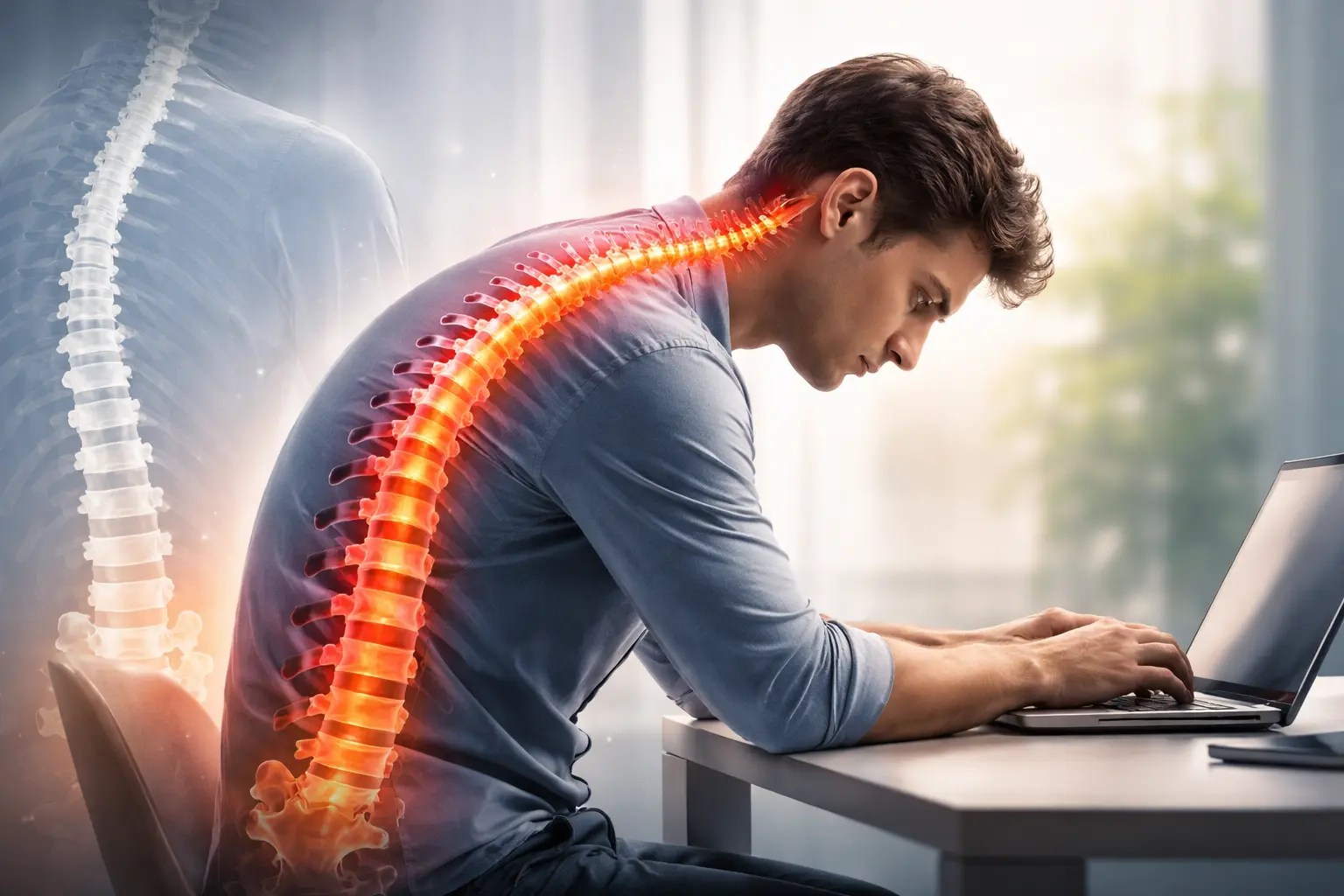
Poor posture refers to the way a person holds their body in a sitting, standing, or moving position that places stress on the spine. The spine supports body weight and helps with movement. A healthy spine has natural curves that keep balance and reduce strain. Poor posture disrupts this balance. It places uneven pressure on muscles, joints, and discs. Over time, this pressure leads to pain, stiffness, and long-term damage. Many people develop poor posture due to long hours of sitting, phone use, or weak muscles. Understanding how poor posture affects the spine helps people take early action and protect their health.
Structure of the Spine and Its Function
The spine consists of 33 vertebrae stacked in a column. These bones protect the spinal cord and allow movement. The spine has three natural curves: cervical (neck), thoracic (upper back), and lumbar (lower back). These curves help distribute body weight evenly. Muscles and ligaments support the spine and keep it stable. Intervertebral discs sit between each vertebra and act as shock absorbers. Poor posture disrupts this system. It changes the alignment of the curves and increases pressure on certain areas. This change leads to stress on discs and surrounding tissues.
Common Causes of Poor Posture
Poor posture often develops from repeated daily habits and underlying physical weakness. Many people spend long hours sitting without proper ergonomic support, especially during office work or extended screen use, which encourages slouching and strain on the spine. Over time, weak core muscles fail to provide adequate stability, further worsening alignment. Using tools like a Posture reminder app can help individuals stay mindful of their sitting and standing positions throughout the day, gently correcting these habits before they become long-term issues. Additionally, carrying heavy bags incorrectly, improper lifting techniques, and uneven weight distribution while standing can disrupt body balance. Combined with a lack of physical activity, which reduces muscle strength and flexibility, these factors contribute to persistent posture problems that can negatively impact overall spinal health.
Immediate Effects of Poor Posture
Poor posture causes quick discomfort in the body. A person may feel neck pain, back pain, or shoulder tension. Muscles work harder to keep balance when posture is poor. This extra effort leads to fatigue. Poor posture also reduces blood flow in certain areas. It may cause headaches due to tension in the neck. Breathing becomes less effective when the chest compresses. These short-term effects signal that the spine is under stress.
Long-Term Effects of Poor Posture on the Spine
Poor posture causes serious damage over time. The spine loses its natural alignment. This misalignment increases pressure on discs and joints. Discs may wear out faster and lose their cushioning ability. This condition leads to pain and reduced flexibility. Chronic poor posture also leads to muscle imbalance. Some muscles become tight, while others become weak. This imbalance affects movement and stability. Over time, these changes reduce overall spine health and increase the risk of injury.
Impact on Intervertebral Discs
Intervertebral discs absorb shock and allow smooth movement. Poor posture places uneven pressure on these discs. This pressure causes the discs to compress more on one side. Over time, this leads to disc degeneration. The disc loses its height and flexibility. In severe cases, the disc may bulge or herniate. This condition causes pain and may press on nearby nerves. Disc problems often develop slowly due to long-term poor posture habits.
Muscle Imbalance and Weakness
Poor posture affects muscle function. Some muscles become overused and tight, especially in the neck and shoulders. Other muscles weaken due to lack of use, such as the core and lower back muscles. This imbalance reduces the body’s ability to support the spine. Weak muscles fail to maintain proper alignment. Tight muscles restrict movement and cause discomfort. Over time, muscle imbalance leads to poor movement patterns and increases the risk of injury.
Effect on Nerves and Pain Development
The spine protects the spinal cord and nerve roots. Poor posture can compress these nerves. When pressure increases, it may cause pain, numbness, or tingling. This condition often affects the neck, lower back, and limbs. Nerve compression can lead to chronic pain if not treated. Poor posture also increases inflammation in tissues. This inflammation contributes to long-term discomfort and reduced mobility.
Changes in Spinal Curvature
The spine has natural curves that support balance. Poor posture alters these curves over time. A person may develop a forward head position or rounded shoulders. The upper back may become more curved, while the lower back may flatten or overarch. These changes affect posture and movement. Abnormal curvature places extra stress on the spine. It also reduces the body’s ability to absorb shock during movement.
Impact on Daily Activities
Poor posture affects daily life in many ways. A person may find it difficult to sit or stand for long periods. Pain and stiffness reduce productivity. Simple tasks like lifting, walking, or bending become harder. Poor posture also affects energy levels. The body uses more effort to maintain balance, which leads to fatigue. Over time, these effects reduce quality of life and limit physical activity.
Psychological Effects of Poor Posture
Poor posture also affects mental well-being. A person with poor posture may feel low energy or discomfort. Pain can reduce focus and mood. Slouched posture may also affect confidence and body image. Research shows that body posture influences mental state. Upright posture supports better mood and alertness, while poor posture may contribute to stress and fatigue.
Prevention of Poor Posture
Preventing poor posture requires simple daily habits. A person should sit with a straight back and feet flat on the floor. The screen should be at eye level to avoid neck strain. Regular breaks reduce stress on the spine. Strengthening core muscles helps support proper alignment. Stretching improves flexibility and reduces muscle tightness. Using ergonomic chairs and desks also supports good posture. These steps help maintain a healthy spine.
Correction and Treatment Options
A person can improve poor posture with proper care. Physical therapy helps strengthen weak muscles and correct alignment. Exercises such as stretching and strengthening support spine health. Posture training teaches proper body positioning during daily activities. In some cases, medical treatment may be needed for severe pain. Early action prevents further damage and improves recovery.
Importance of Awareness and Consistency
Awareness plays a key role in correcting poor posture. A person must notice their posture during daily tasks. Small changes in sitting, standing, and walking habits make a big difference. Consistency ensures long-term improvement. Regular exercise and mindful posture reduce the risk of spine problems. Over time, these habits support a strong and healthy spine.
Conclusion
Poor posture affects the spine in many ways over time. It disrupts alignment, weakens muscles, and increases pressure on discs and nerves. These changes lead to pain, stiffness, and reduced mobility. Early awareness and proper habits help prevent damage. Simple actions such as correct sitting, regular movement, and muscle strengthening support spine health. A person who maintains good posture protects their spine and improves overall well-being.
 Lifestyle Studio